 Add to Chrome
 Add to Firefox
 Add to Edge
Can LLMs Time Travel? Enhancing Temporal Consistency in Legal Agentic Search through Reinforcement Learning
May 25, 2026
While large language models (LLMs) augmented with agentic search capabilities show promise for legal reasoning, they overlook a fundamental constraint that applicable law must match the temporal context of each case, as retroactive application of statutes violates core legal principles and leads to erroneous conclusions. Our observations reveal that current legal LLMs suffer from temporal bias anchored to their training cutoff, while search agents rarely incorporate temporal constraints into queries, and that web search alone cannot provide the precise statute and precedent citations that legal reasoning demands. To address these challenges, we propose LegalSearch-R1, an end-to-end reinforcement learning framework that pairs local statute RAG for precise article matching with online web search for broader legal knowledge, trained on temporally-indexed data spanning multiple amendment periods to enforce temporal consistency. Extensive experiments on our benchmark covering 13 legal tasks demonstrate that our 7B-parameter agent outperforms state-of-the-art deep research frameworks and specialized legal LLMs by 12.9% to 29.8%, surpasses baselines by 57.7% to 80.3% on temporal consistency, and exhibits robust out-of-domain generalization. The code and data are available at https://github.com/AlexFanw/LegalSearch-R1.

Towards Active Real-to-Twin Inspection: A New Paradigm for Zero-Shot Anomaly Detection
May 25, 2026The deployment of zero-shot anomaly detection (AD) in embodied industrial inspection is severely bottlenecked by its reliance on passive, fixed-viewpoint 2D imagery. Such formulations inherently fail to accommodate the active, dynamic observations required in real-world environments. To break this limitation, we introduce Real-to-Twin Anomaly Detection, a novel task that evaluates physical observations directly against geometrically matched CAD Digital Twins. To tackle this new task, we propose AVATAR, a framework designed to learn robust semantic alignment between Real and Digital Twins. By bridging benign Sim2Real domain gaps using only defect-free pairs, AVATAR effectively transforms CAD priors into dynamic, anomaly-free references. This elegant formulation enables the model to localize diverse anomalies in a zero-shot manner as unalignable deviations, eliminating the need for defect annotations. Extensive experiments demonstrate that AVATAR substantially outperforms adapted state-of-the-art baselines, exhibiting exceptional robustness to severe viewpoint variations. The code and dataset will be made publicly available.
ReRoPE: Repurposing RoPE for Relative Camera Control
Feb 08, 2026Video generation with controllable camera viewpoints is essential for applications such as interactive content creation, gaming, and simulation. Existing methods typically adapt pre-trained video models using camera poses relative to a fixed reference, e.g., the first frame. However, these encodings lack shift-invariance, often leading to poor generalization and accumulated drift. While relative camera pose embeddings defined between arbitrary view pairs offer a more robust alternative, integrating them into pre-trained video diffusion models without prohibitive training costs or architectural changes remains challenging. We introduce ReRoPE, a plug-and-play framework that incorporates relative camera information into pre-trained video diffusion models without compromising their generation capability. Our approach is based on the insight that Rotary Positional Embeddings (RoPE) in existing models underutilize their full spectral bandwidth, particularly in the low-frequency components. By seamlessly injecting relative camera pose information into these underutilized bands, ReRoPE achieves precise control while preserving strong pre-trained generative priors. We evaluate our method on both image-to-video (I2V) and video-to-video (V2V) tasks in terms of camera control accuracy and visual fidelity. Our results demonstrate that ReRoPE offers a training-efficient path toward controllable, high-fidelity video generation. See project page for more results: https://sisyphe-lee.github.io/ReRoPE/
NAACL: Noise-AwAre Verbal Confidence Calibration for LLMs in RAG Systems
Jan 16, 2026Accurately assessing model confidence is essential for deploying large language models (LLMs) in mission-critical factual domains. While retrieval-augmented generation (RAG) is widely adopted to improve grounding, confidence calibration in RAG settings remains poorly understood. We conduct a systematic study across four benchmarks, revealing that LLMs exhibit poor calibration performance due to noisy retrieved contexts. Specifically, contradictory or irrelevant evidence tends to inflate the model's false certainty, leading to severe overconfidence. To address this, we propose NAACL Rules (Noise-AwAre Confidence CaLibration Rules) to provide a principled foundation for resolving overconfidence under noise. We further design NAACL, a noise-aware calibration framework that synthesizes supervision from about 2K HotpotQA examples guided by these rules. By performing supervised fine-tuning (SFT) with this data, NAACL equips models with intrinsic noise awareness without relying on stronger teacher models. Empirical results show that NAACL yields substantial gains, improving ECE scores by 10.9% in-domain and 8.0% out-of-domain. By bridging the gap between retrieval noise and verbal calibration, NAACL paves the way for both accurate and epistemically reliable LLMs.
DeCo-SGD: Joint Optimization of Delay Staleness and Gradient Compression Ratio for Distributed SGD
Jul 23, 2025Distributed machine learning in high end-to-end latency and low, varying bandwidth network environments undergoes severe throughput degradation. Due to its low communication requirements, distributed SGD (D-SGD) remains the mainstream optimizer in such challenging networks, but it still suffers from significant throughput reduction. To mitigate these limitations, existing approaches typically employ gradient compression and delayed aggregation to alleviate low bandwidth and high latency, respectively. To address both challenges simultaneously, these strategies are often combined, introducing a complex three-way trade-off among compression ratio, staleness (delayed synchronization steps), and model convergence rate. To achieve the balance under varying bandwidth conditions, an adaptive policy is required to dynamically adjust these parameters. Unfortunately, existing works rely on static heuristic strategies due to the lack of theoretical guidance, which prevents them from achieving this goal. This study fills in this theoretical gap by introducing a new theoretical tool, decomposing the joint optimization problem into a traditional convergence rate analysis with multiple analyzable noise terms. We are the first to reveal that staleness exponentially amplifies the negative impact of gradient compression on training performance, filling a critical gap in understanding how compressed and delayed gradients affect training. Furthermore, by integrating the convergence rate with a network-aware time minimization condition, we propose DeCo-SGD, which dynamically adjusts the compression ratio and staleness based on the real-time network condition and training task. DeCo-SGD achieves up to 5.07 and 1.37 speed-ups over D-SGD and static strategy in high-latency and low, varying bandwidth networks, respectively.
AutoSchemaKG: Autonomous Knowledge Graph Construction through Dynamic Schema Induction from Web-Scale Corpora
May 29, 2025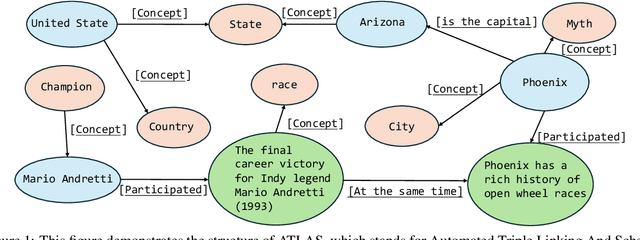
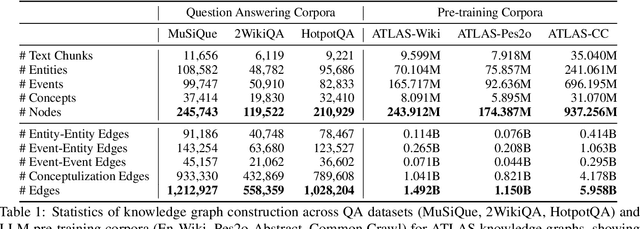
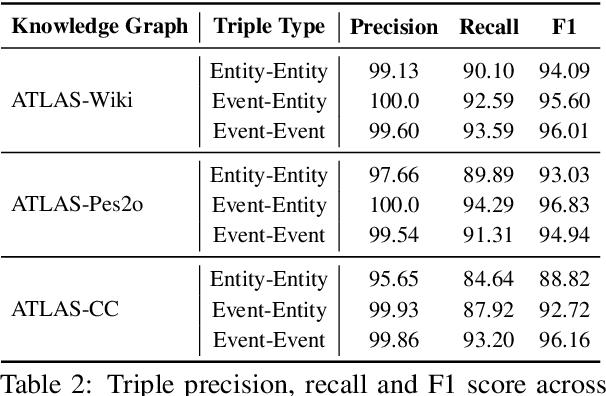
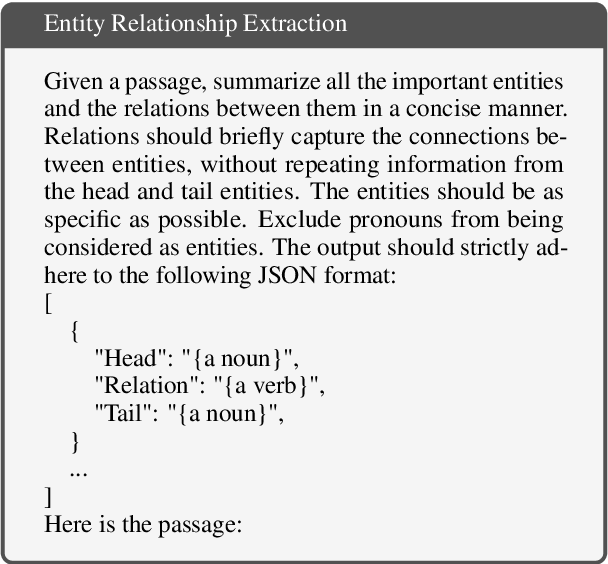
We present AutoSchemaKG, a framework for fully autonomous knowledge graph construction that eliminates the need for predefined schemas. Our system leverages large language models to simultaneously extract knowledge triples and induce comprehensive schemas directly from text, modeling both entities and events while employing conceptualization to organize instances into semantic categories. Processing over 50 million documents, we construct ATLAS (Automated Triple Linking And Schema induction), a family of knowledge graphs with 900+ million nodes and 5.9 billion edges. This approach outperforms state-of-the-art baselines on multi-hop QA tasks and enhances LLM factuality. Notably, our schema induction achieves 95\% semantic alignment with human-crafted schemas with zero manual intervention, demonstrating that billion-scale knowledge graphs with dynamically induced schemas can effectively complement parametric knowledge in large language models.
INFERENCEDYNAMICS: Efficient Routing Across LLMs through Structured Capability and Knowledge Profiling
May 22, 2025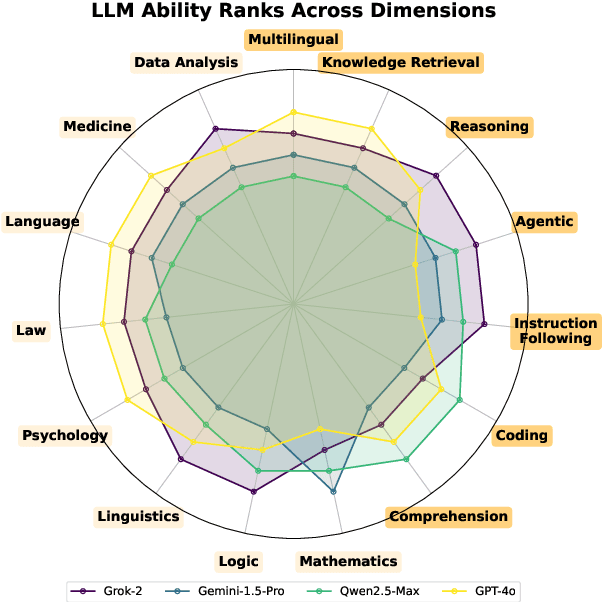
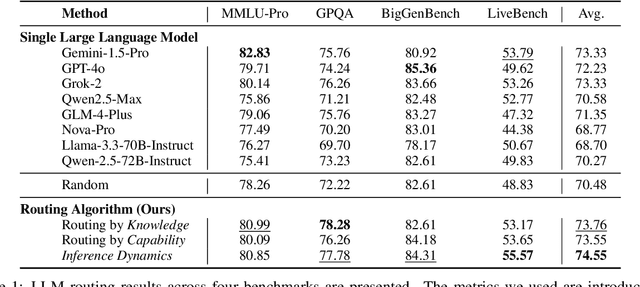
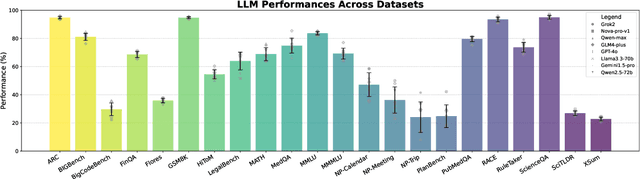
Large Language Model (LLM) routing is a pivotal technique for navigating a diverse landscape of LLMs, aiming to select the best-performing LLMs tailored to the domains of user queries, while managing computational resources. However, current routing approaches often face limitations in scalability when dealing with a large pool of specialized LLMs, or in their adaptability to extending model scope and evolving capability domains. To overcome those challenges, we propose InferenceDynamics, a flexible and scalable multi-dimensional routing framework by modeling the capability and knowledge of models. We operate it on our comprehensive dataset RouteMix, and demonstrate its effectiveness and generalizability in group-level routing using modern benchmarks including MMLU-Pro, GPQA, BigGenBench, and LiveBench, showcasing its ability to identify and leverage top-performing models for given tasks, leading to superior outcomes with efficient resource utilization. The broader adoption of Inference Dynamics can empower users to harness the full specialized potential of the LLM ecosystem, and our code will be made publicly available to encourage further research.
Legal Rule Induction: Towards Generalizable Principle Discovery from Analogous Judicial Precedents
May 20, 2025Legal rules encompass not only codified statutes but also implicit adjudicatory principles derived from precedents that contain discretionary norms, social morality, and policy. While computational legal research has advanced in applying established rules to cases, inducing legal rules from judicial decisions remains understudied, constrained by limitations in model inference efficacy and symbolic reasoning capability. The advent of Large Language Models (LLMs) offers unprecedented opportunities for automating the extraction of such latent principles, yet progress is stymied by the absence of formal task definitions, benchmark datasets, and methodologies. To address this gap, we formalize Legal Rule Induction (LRI) as the task of deriving concise, generalizable doctrinal rules from sets of analogous precedents, distilling their shared preconditions, normative behaviors, and legal consequences. We introduce the first LRI benchmark, comprising 5,121 case sets (38,088 Chinese cases in total) for model tuning and 216 expert-annotated gold test sets. Experimental results reveal that: 1) State-of-the-art LLMs struggle with over-generalization and hallucination; 2) Training on our dataset markedly enhances LLMs capabilities in capturing nuanced rule patterns across similar cases.
$γ$-FedHT: Stepsize-Aware Hard-Threshold Gradient Compression in Federated Learning
May 18, 2025Gradient compression can effectively alleviate communication bottlenecks in Federated Learning (FL). Contemporary state-of-the-art sparse compressors, such as Top-$k$, exhibit high computational complexity, up to $\mathcal{O}(d\log_2{k})$, where $d$ is the number of model parameters. The hard-threshold compressor, which simply transmits elements with absolute values higher than a fixed threshold, is thus proposed to reduce the complexity to $\mathcal{O}(d)$. However, the hard-threshold compression causes accuracy degradation in FL, where the datasets are non-IID and the stepsize $\gamma$ is decreasing for model convergence. The decaying stepsize reduces the updates and causes the compression ratio of the hard-threshold compression to drop rapidly to an aggressive ratio. At or below this ratio, the model accuracy has been observed to degrade severely. To address this, we propose $\gamma$-FedHT, a stepsize-aware low-cost compressor with Error-Feedback to guarantee convergence. Given that the traditional theoretical framework of FL does not consider Error-Feedback, we introduce the fundamental conversation of Error-Feedback. We prove that $\gamma$-FedHT has the convergence rate of $\mathcal{O}(\frac{1}{T})$ ($T$ representing total training iterations) under $\mu$-strongly convex cases and $\mathcal{O}(\frac{1}{\sqrt{T}})$ under non-convex cases, \textit{same as FedAVG}. Extensive experiments demonstrate that $\gamma$-FedHT improves accuracy by up to $7.42\%$ over Top-$k$ under equal communication traffic on various non-IID image datasets.
Towards Multi-Agent Reasoning Systems for Collaborative Expertise Delegation: An Exploratory Design Study
May 12, 2025Designing effective collaboration structure for multi-agent LLM systems to enhance collective reasoning is crucial yet remains under-explored. In this paper, we systematically investigate how collaborative reasoning performance is affected by three key design dimensions: (1) Expertise-Domain Alignment, (2) Collaboration Paradigm (structured workflow vs. diversity-driven integration), and (3) System Scale. Our findings reveal that expertise alignment benefits are highly domain-contingent, proving most effective for contextual reasoning tasks. Furthermore, collaboration focused on integrating diverse knowledge consistently outperforms rigid task decomposition. Finally, we empirically explore the impact of scaling the multi-agent system with expertise specialization and study the computational trade off, highlighting the need for more efficient communication protocol design. This work provides concrete guidelines for configuring specialized multi-agent system and identifies critical architectural trade-offs and bottlenecks for scalable multi-agent reasoning. The code will be made available upon acceptance.